Beyond "Game Dev" - Why Game Engines Are the New Universal Design Tool
Is it time to retire the term, “game engine?”
When we hear “game engine,” we think “game developer,” and the conversation just stops there. This is a problem because educators, students, and even companies are failing to see the real potential. These platforms, like Unreal Engine and Unity, are powerful real-time 3D simulation engines, and they’re quietly becoming foundational across a shocking number of industries.
The “game developer” job title, too, is becoming obsolete for a huge chunk of the people who have that skill. The graduates we’re training aren’t just making entertainment. They’re designing skyscrapers, planning Mars missions, and building virtual film sets. If we keep calling them “game engines,” we’re limiting our students’ vision of their own careers.
NASA: From Mars to the Moon
Take NASA. The space agency and its partners are heavily invested in this tech for serious, mission-critical work. They are actively using Unreal Engine 5 to build the Mars XR Operations Support System. This isn’t a game; it’s a high-fidelity simulation that lets them prepare astronauts for extra-planetary operations, practicing base construction and scientific research in a realistic virtual environment.
[caption id=“attachment_1033” align=“aligncenter” width=“2560”]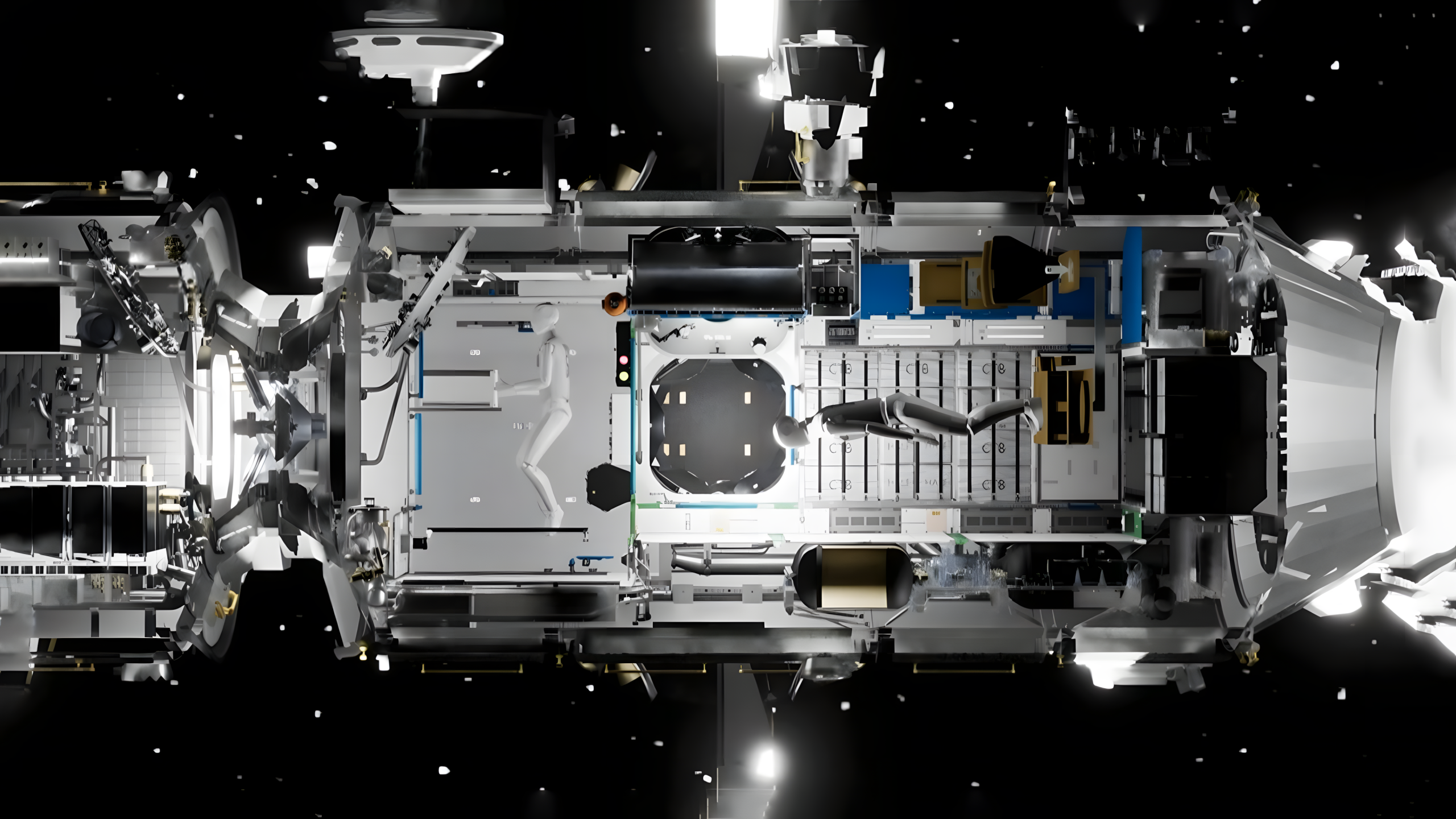 Source: Unreal Fest Orlando 2025, NASA[/caption]
It’s also being used to build a full-scale, interactive VR model of the Gateway lunar space station. Astronauts and engineers can “walk” through it and test ergonomics, procedures, and human-factors engineering long before a single, multi-billion-dollar piece of hardware is launched.
It’s kind of wild to think the same core technology that powers the popular video game Fortnite is also planning Mars missions. How cool is that?!
Hollywood’s New “On-Set” Reality
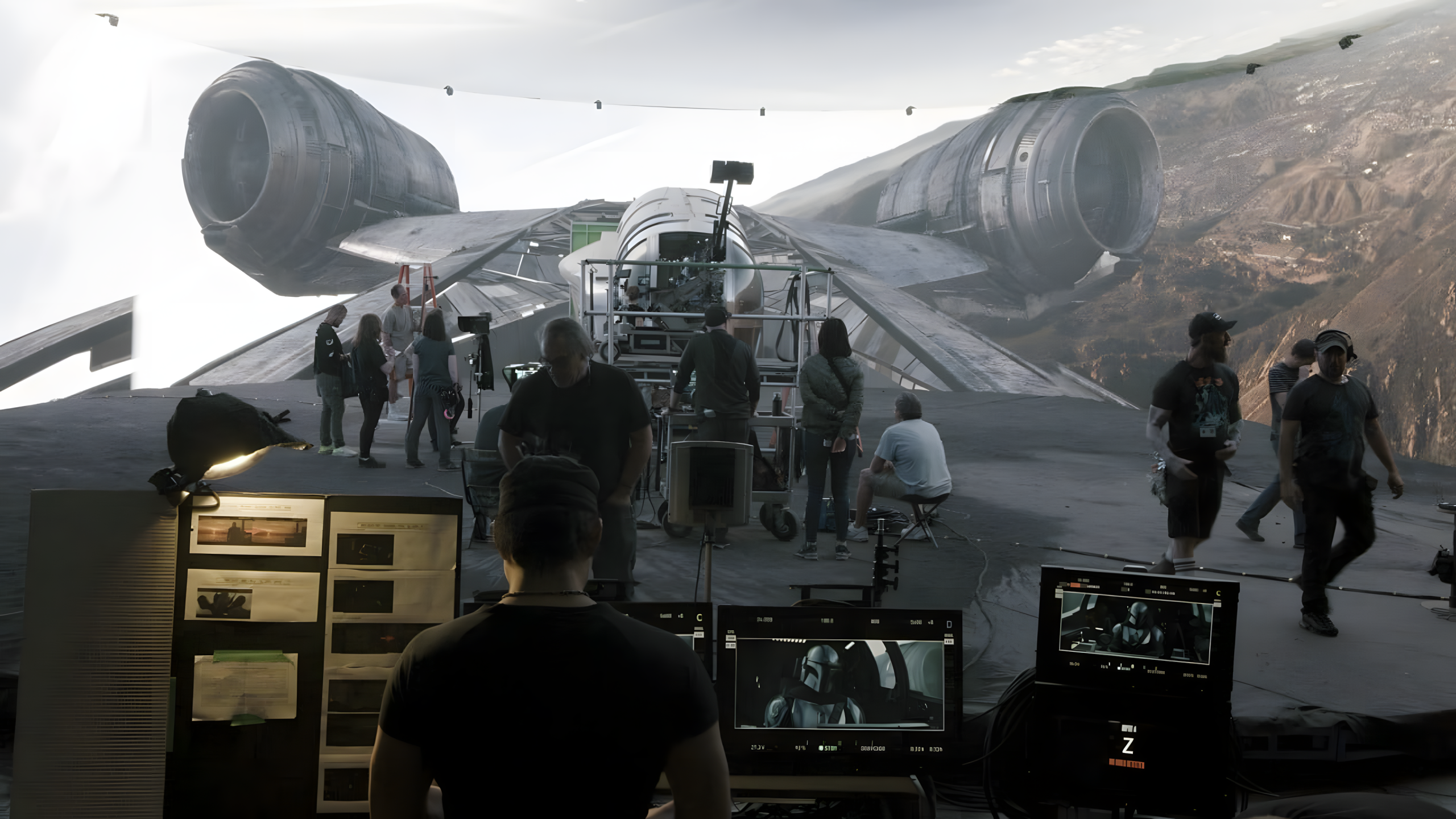
And then there’s Hollywood. The film industry has been completely upended by this. ILM’s “StageCraft” LED volume, famous from The Mandalorian, is essentially a giant, curved screen running Unreal Engine in real-time. This workflow changes everything. It moves post-production visual effects work directly into the live-action shoot.
[caption id=“attachment_1035” align=“aligncenter” width=“2560”] Over 50 percent of The Mandalorian Season One was filmed using StageCraft. © 2022 Lucasfilm Ltd. & TM. All Rights Reserved.[/caption]
Directors and cinematographers can see the final shot live as they film. More importantly, actors can perform in a virtual environment, reacting to light and scenery that are actually there, not just a sea of green cloth. Wētā FX has been using these same real-time principles for years to pull off the breathtaking visuals in films like Avatar: The Way of Water.
The New “Digital Twin”: A Full Ecosystem
This concept of a “digital twin” (a real-time virtual copy of a physical object or system) is where this tech explodes into nearly every other industry.
- Automotive: The car is becoming a software platform. General Motors was a pioneer, building the digital dashboard and infotainment system (HMI) in the GMC HUMMER EV entirely in Unreal. BMW is all in. They built a massive 11,400-square-meter driving simulator with Unreal to test designs and use Unity for AR head-up display prototypes.
- Architecture & Construction (AEC): I sometimes wonder if architects who don’t use this even realize how much of a disadvantage they’re at. Why would a client sign off on a 2D blueprint when a competitor is letting them do a fully immersive, 1:1 scale walkthrough of the building in real-time?
- Manufacturing & Logistics: Companies are using these engines to build 1:1 digital twins of their factories. They can simulate new robotic assembly lines, find bottlenecks, and train workers on complex machinery in a perfectly safe virtual environment.
[caption id=“attachment_1038” align=“aligncenter” width=“1920”]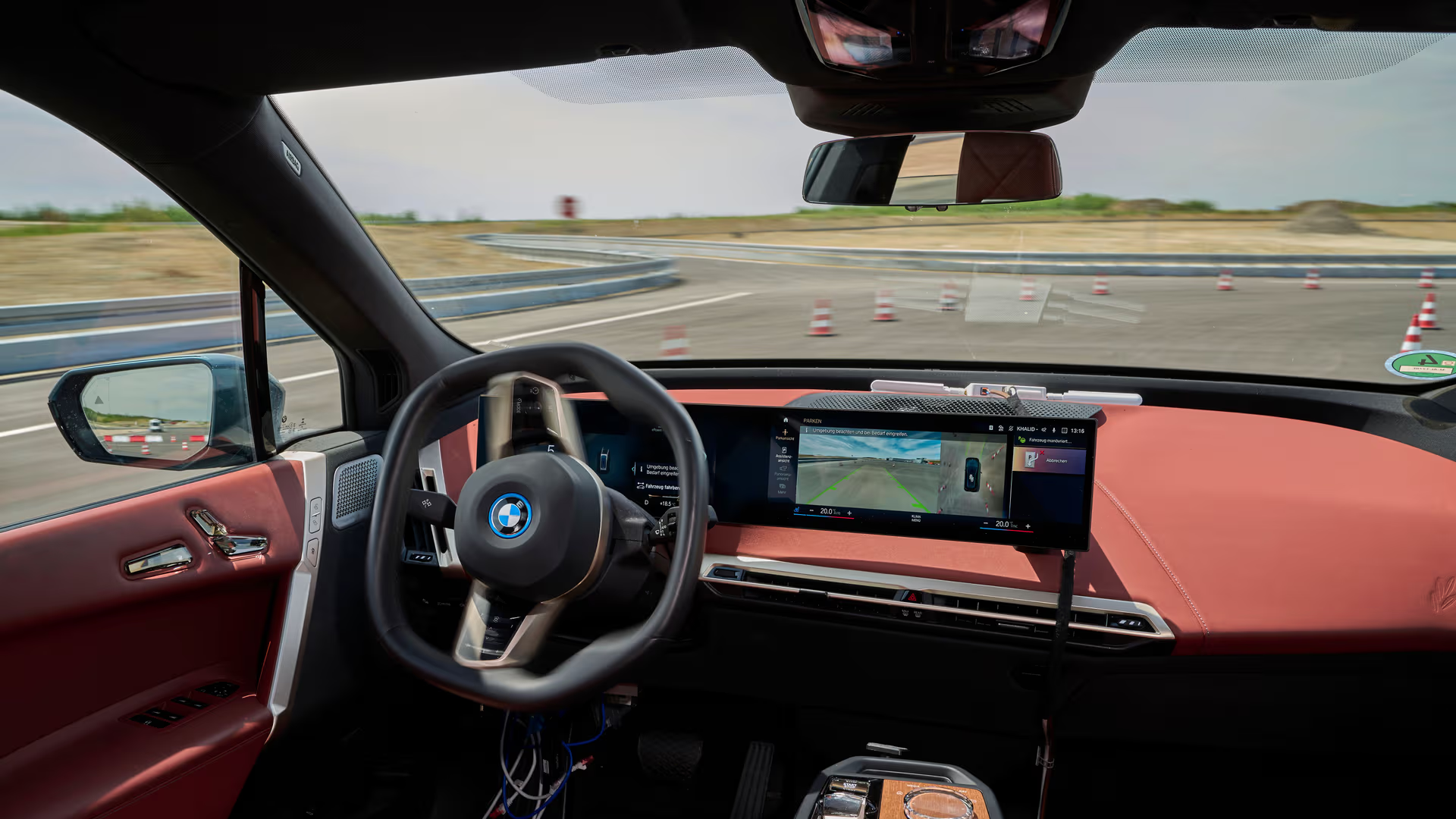 BMW is innovating the in-vehicle experience with Unity[/caption]
This rapid adoption, particularly in the Unreal Engine world, is possible because it’s an entire ecosystem, not just one program. Unreal Engine has “cousins” that Epic Games has integrated to create a complete pipeline.
It’s kind of wild to think the same core technology that powers the popular video game Fortnite is also planning Mars missions.
This is especially true in architecture, where Twinmotion is a dominant force. It’s a tool built for architects and designers who need stunning, photorealistic visualizations fast, without needing to be a C++ developer. And where do the realistic materials come from? That’s Quixel. It’s a massive library of 3D-scanned, real-world assets (every kind of brick, fabric, rock, or plant imaginable) that developers can just drag and drop.
The final piece is getting the real world in. That’s what Reality Scan does. It’s an app that lets anyone use their phone to 3D-scan a real object, it could be a piece of factory equipment, a sofa for an interior design, or a building facade, and turn it into a 3D model. Anyone!
So you have a complete pipeline: Reality Scan (capture the world), Quixel (decorate the world), Twinmotion (visualize it easily), and Unreal Engine (build the final, high-end simulation).
The Educational Imperative
The point is, the message for educators and institutions has to change. Our curriculums aren’t just for “game developers.” They’re cultivating digital architects, virtual production artists, and simulation specialists.
If we don’t make this shift in language, we’re failing our students. We need to teach the whole pipeline, not just the “engine.” We’re letting them graduate with a narrow view of their own skills, potentially missing massive opportunities in aerospace, film, or engineering simply because they (and the industries themselves) didn’t know they were speaking the same language. These are universal design tools, and the people who master them are going to be building the next generation of everything.