Stop Building Games. Start Building a Skills Inventory

Whenever I teach an introductory game design course, I watch students walk into their first capstone with a glint in their eye and a forty-page document.
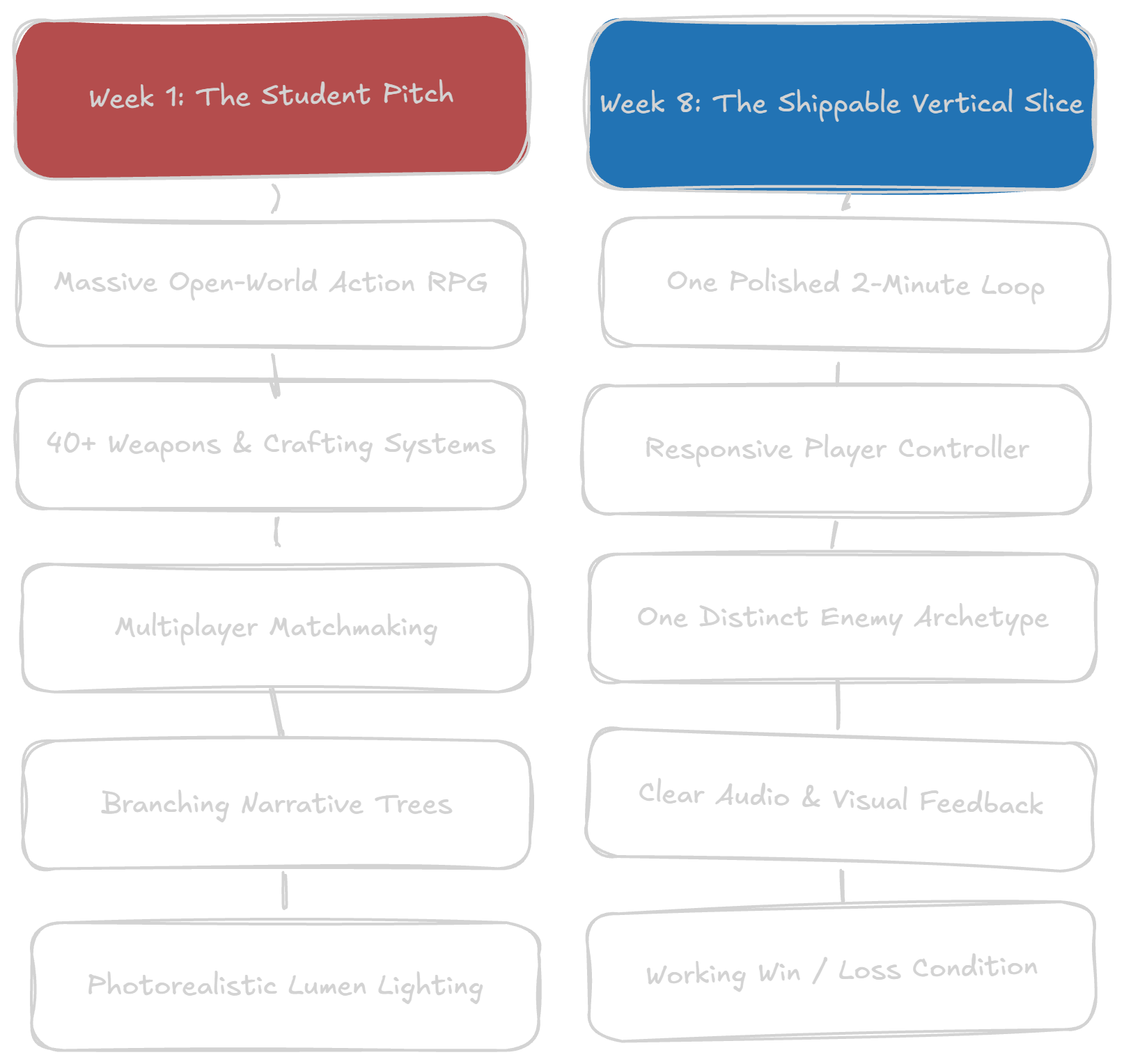
The pitch is almost always the same: an open-world action RPG set in a sprawling post-apocalyptic fantasy universe. It has three playable factions, forty customizable weapons, branching dialogue trees, multiplayer matchmaking, and dynamic weather powered by Unreal Engine 5’s Nanite and Lumen systems.
By week six, the classroom mood shifts from excitement to quiet panic.
The student has an unrigged character mesh that slides across the floor without foot IK. They have half of an inventory screen, twelve unfinished C# scripts or Blueprint graphs, and zero playable game loop. When you ask them to hit Play, the camera clips through a wall and nothing moves.
This failure pattern is not exclusive to classrooms. First-time indie developers fall into the exact same trap.
They spend two years working in isolation, trying to build their own version of Grand Theft Auto or Skyrim. They fill notebooks with factions, lore, and concept art. Then they realize that building an inventory system alone requires managing save states, item data structures, UI navigation, and edge-case exceptions they never anticipated. Overwhelmed, they abandon the project, start a new engine project, and repeat the cycle.
They never learn how to ship a game because they never allow themselves to reach a finish line. The diagram below illustrates where that shift has to happen, cutting away the bloat so students end up with a project they can actually ship.
Confusing World Lore with Game Systems
Beginners struggle with scope because they confuse creative ambition with system architecture.
In film or fiction writing, thinking bigger costs nothing. Writing a battle scene with ten thousand soldiers takes the same amount of ink as writing two people talking in a kitchen. In game development, scale carries a compounding technical cost. Every feature you add multiplies the testing surface and breaks existing interactions.
When an inexperienced developer thinks about building an open-world RPG, they envision the emotional outcome: exploring a majestic valley on horseback. They do not envision the hundred underlying technical tasks required to make that moment work:
- Character locomotion state machines (idle, walk, run, jump, land)
- Collision volumes and ground raycasts
- Programmatic camera collision to prevent wall clipping
- Input buffering and response curves
- Sound cue triggers on terrain surfaces
- Save and load serialization
Without production discipline, junior developers try to build all of these systems simultaneously inside one giant, monolithic project. When things inevitably break, they do not know which system caused the error.
What AAA Production Teaches About Cutting
When I worked in game production at Electronic Arts the most important design skill in the studio was not generating ideas. There is no shortage of cool ideas. Instead, it was milestone triage.
Shipping a commercial game on schedule is an exercise in ruthless scope reduction. On every sprint, our leads sat in war rooms reviewing feature backlogs. If an interaction was not directly supporting the primary player fantasy, or if the engineering budget was slipping, we cut it. We cut entire levels, secondary mechanics, and dialogue branches to ensure the core mechanics felt responsive, stable, and fun.
In a university setting, a high school classroom, or even an indie studio, you do not have forty engineers or a dedicated QA department to bail you out. That means your scope reduction has to happen before you write the first line of code.
The Alternative: Building a Modular Skills Inventory
The developers who actually complete projects do not start by building a game. They start by building an inventory of modular systems.
Instead of trying to build an entire open-world game at once, shift your focus to self-contained micro-prototypes:
- Isolate a single mechanic. Decide that this week’s goal is not “building the RPG,” but building a responsive double-jump with variable jump height and coyote time.
- Polish the interaction in a greybox sandbox. Do not import 8K textures or character models. Use basic geometric primitives. Focus entirely on input feel, camera anticipation, and audio feedback.
- Establish a strict two-minute playtest loop. If a player cannot understand the mechanic, complete an action, and reach a clear win or lose condition within two minutes, the scope is too wide.
- Package and archive the component. Once the mechanic works reliably, save that project and export the code or Blueprint component into your personal toolkit.
When you work this way, game development stops feeling like an endless marathon. You finish projects. You build momentum. Most importantly, you build a library of proven components that you fully understand and can reuse in future games.
Complex games are not built from scratch in one heroic effort. They are assembled from smaller, modular prototypes that you have already built, debugged, and mastered.
An 8-Week Milestone Blueprint for Student Success
In my curriculum design work at both the university level and for high school CTE publishers, I use a milestone progression designed to prevent the mid-term collapse:
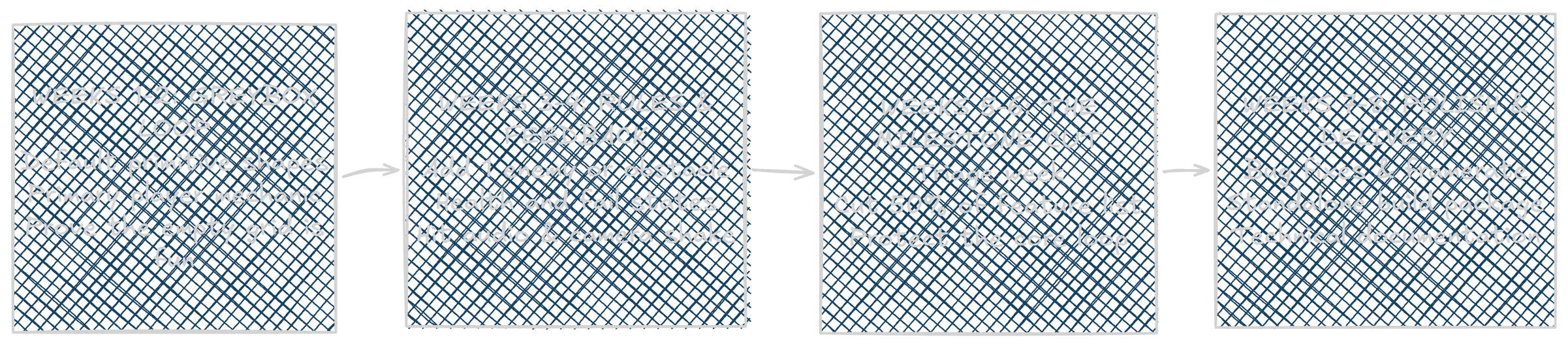
This progression also works well beyond an eight-week course calendar. Whether your build cycle is two months or two years, it forces you to prioritize playable mechanics first and gives your team an objective framework for deciding what to cut and where to head next.
Finish Lines Matter!
If you are a student or a first-time indie developer preparing to start a project, put your dream project design document on a shelf for six months.
Pick one mechanic. Build a two-minute game where that mechanic feels great. Ship it on itch.io. Get feedback from players. Then take what you learned and build the next one.
Studio leads and faculty do not judge your potential by the size of your unplayable ambitions. They look for developers who understand scope, respect player feel, and know how to carry a project across a finish line.
* Thumbnail photo by Milad Fakurian on Unsplash