What Exactly Is Ray Tracing?

Imagine walking through a serene forest at sunrise. The golden light filters through the canopy, casting soft shadows that dance on the forest floor. You pause near a stream, watching as the sunlight reflects off the rippling water, creating dazzling patterns that seem to shimmer with life. The interplay of light, shadow, and reflection feels so natural that you don’t even think about it.
Now, picture recreating that same experience—but on a screen. This is where ray tracing comes in, a groundbreaking technology makes virtual worlds as immersive and visually stunning as the ‘real’ one.
The Magic Behind the Illusion
At its heart, ray tracing is all about light. To understand it, you need to think like light itself. When you look at a scene in real life, your eyes are perceiving rays of light that have bounced off surfaces around you. Ray tracing replicates this phenomenon by simulating rays of light in a digital environment.
Here’s how it works: imagine a ray of light leaving a source, like the sun. It travels until it hits something—a tree, a rock, or maybe a puddle of water. At that point, the ray interacts with the surface. It might bounce off, creating a reflection, or pass through, bending and scattering as it does. Every interaction affects the ray’s path, color, and intensity. Ray tracing follows these journeys, capturing all those interactions to render images that feel alive.
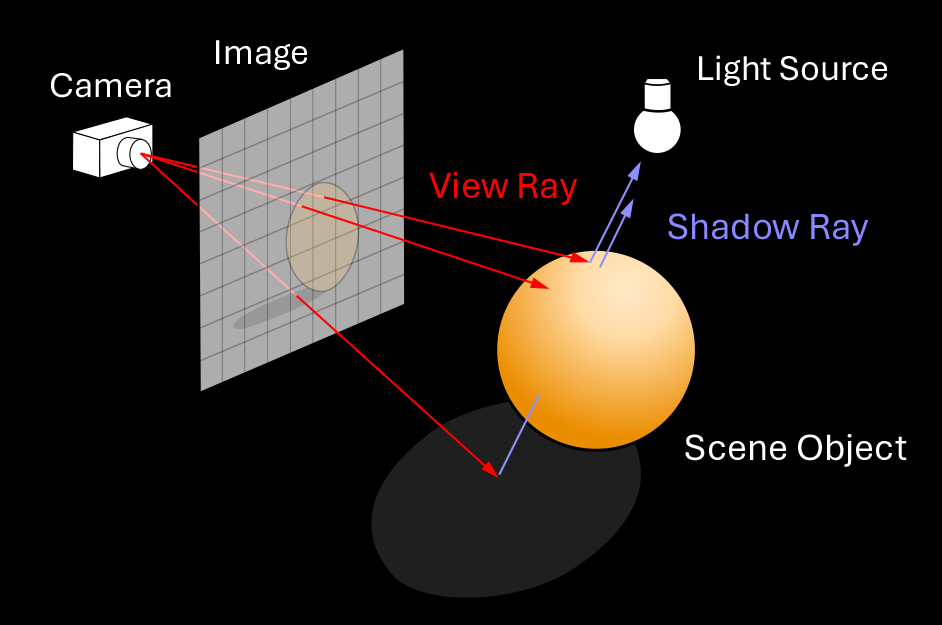 Source: Henrik, CC BY-SA 4.0, via Wikimedia Commons

But why go through all that trouble? Traditional rendering techniques, like rasterization, use shortcuts to approximate lighting. They can produce good visuals, but they struggle with dynamic reflections, realistic shadows, and nuanced lighting. Ray tracing aims to simulate—precisely—how light and shadows behave in the physical world.
Why Ray Tracing Matters
Let’s step into a video game like Cyberpunk 2077, where ray tracing really does transform the experience. The neon signs of a futuristic city reflect off wet pavement as rain falls softly. Glass skyscrapers catch the glow of nearby lights, and shadows shift as characters move. Without ray tracing, these elements would feel flat or artificially static. With it, they breathe!
What’s fascinating about ray tracing is its ability to blur the line between real and virtual. It creates visuals so convincing that you might catch yourself pausing to admire a reflection in a puddle or the way sunlight filters through a stained-glass window. Suddenly, the world feels less like a collection of polygons and pixels and more like a place you could actually step into.
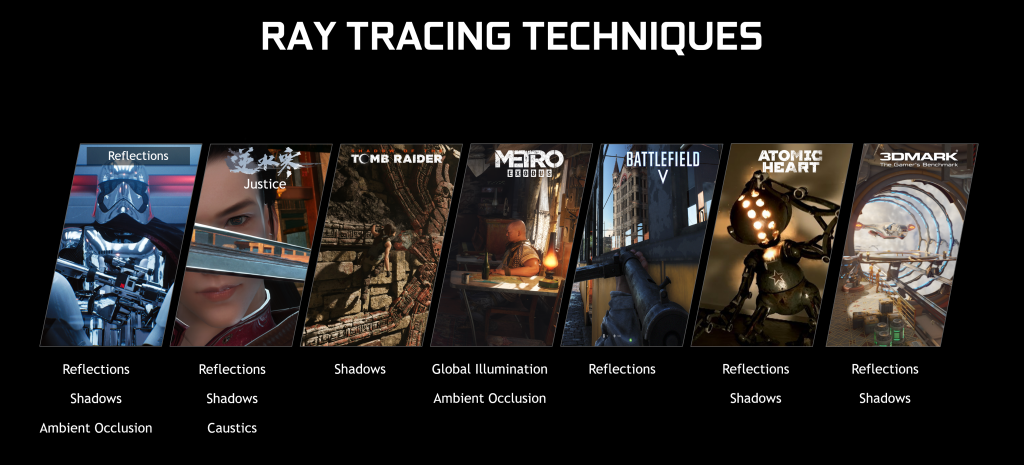
Source: NVIDIA
Where Ray Tracing Shines
Ray tracing isn’t just limited to games. Its reach extends far beyond, into realms where realism is paramount:
- Movies: Ever wonder how Pixar or Marvel achieves such lifelike visuals? Ray tracing has been a staple in film production for years, helping create breathtaking scenes filled with subtle lighting details.
- Architecture: Architects use ray tracing to visualize how light will interact with materials in their designs—before a single brick is laid.
- Product Design: Imagine seeing a new car ad where the paint gleams just right, and the chrome trim glints under soft studio lighting. That’s ray tracing at work.
The Hidden Struggle: Powering Ray Tracing
For all its beauty, ray tracing has one major drawback. Every ray of light needs to be calculated, tracked, and rendered, and this process that eats up a massive amount of computational power. In the past, it was so resource-intensive that it was mostly reserved for pre-rendered scenes in movies or design work.
Then came the revolution: hardware designed specifically for real-time ray tracing. NVIDIA’s RTX GPUs and similar technologies brought ray tracing to games and other interactive experiences. By combining ray tracing with traditional techniques (a hybrid approach), and using clever tricks like AI-powered denoising, developers made it possible to achieve photorealism without breaking your computer.
Looking Ahead
The future of ray tracing is dazzling. As hardware grows more powerful, ray tracing is becoming faster, smoother, and more accessible. Cloud gaming platforms are making high-quality visuals available even on modest devices, while artificial intelligence is pushing rendering efficiency to new heights.
But ray tracing’s evolution isn’t just about better graphics—it’s about storytelling. Imagine games and movies where the visuals are so lifelike they don’t just set the stage—they pull you in, immersing you in experiences that feel authentic and unfiltered.
https://www.youtube.com/watch?v=J3ue35ago3Y&t=31s
A New Era of Visual Storytelling
Ray tracing isn’t just a technology—it’s a step closer to closing the gap between the real world and the digital one. It lets us experience virtual worlds in a way that feels visceral, where light behaves as naturally as it does in our own lives. Whether you’re admiring the glow of neon streets in a game or marveling at the realistic sheen on a car in an ad, ray tracing is changing the way we see and interact with digital spaces.
The next time you see a reflection that takes your breath away in a game or a film, remember: that’s the magic of ray tracing. And it’s only the beginning!